

 VN
VN DE
DE KOR
KOR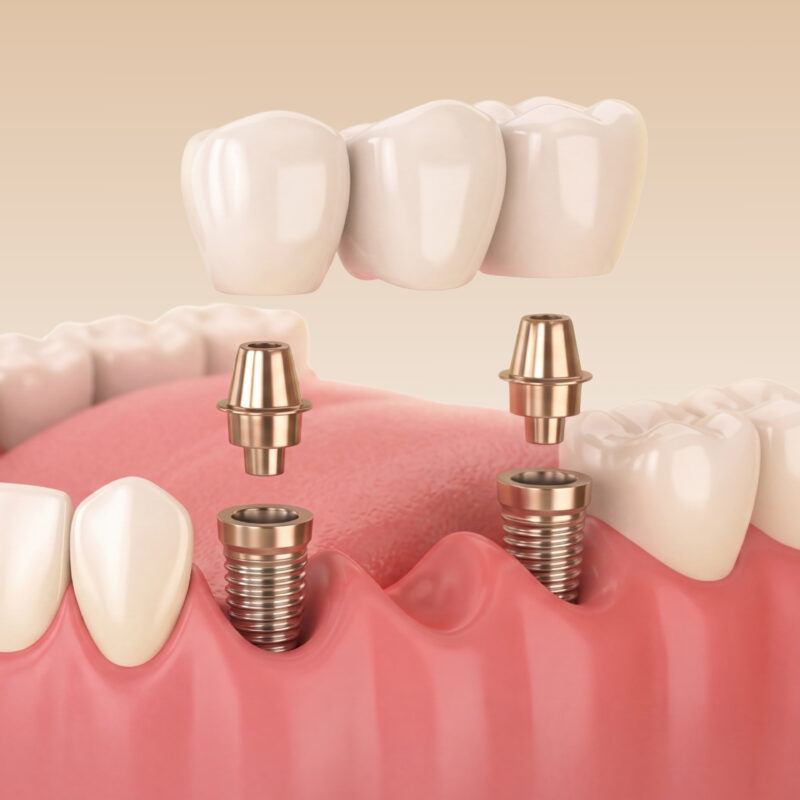
What is a Dental Implant and is it expensive? This is a common question for many people looking to restore missing teeth. To clearly understand the exact definition and update the latest Implant pricing, let’s refer to the detailed article below from German Dental Clinic.
1. What is a Dental Implant?
Dental Implant (artificial tooth root implantation) is the most advanced missing tooth restoration method today.
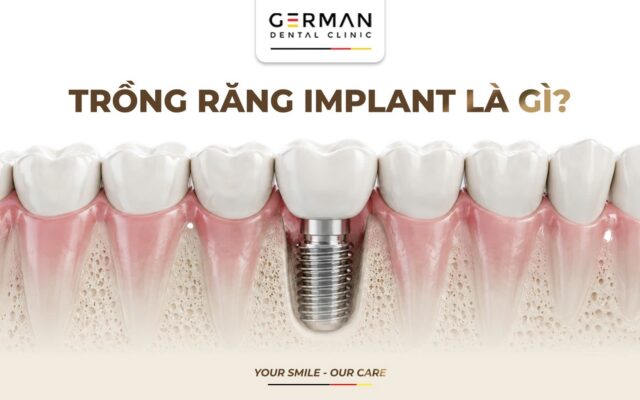
Regarding structure, a complete Implant tooth consists of 3 main parts:
Implant Post (Titanium): Implanted directly into the jawbone to replace the real tooth root. Titanium material has high biocompatibility and firmly attaches to the jawbone.
Connector (Abutment): The connecting part between the Implant post and the porcelain crown above.
Porcelain Crown: Has the shape, color, and size crafted exactly like a real tooth to ensure chewing function and aesthetics.
2. Why choose Dental Implants?
Compared to traditional methods like dental bridges or removable dentures, Implants possess outstanding advantages:
Prevent jawbone loss: This is the only method that helps stimulate jawbone growth, avoiding a sunken appearance and facial distortion due to prolonged tooth loss.
Non-invasive to adjacent teeth: No need to grind down the two adjacent natural teeth as when making a dental bridge.
Chew like real teeth: Excellent load-bearing capacity, allowing you to comfortably eat hard and chewy foods.
High longevity: If cared for properly, an Implant tooth can last a lifetime.
3. Who should get Dental Implants?
Most adults missing teeth can undergo this procedure, specifically:
Missing 1 or multiple teeth: Want to restore without grinding down the adjacent natural teeth (like a porcelain bridge).
Full jaw tooth loss: Want a fixed, sturdy set of teeth instead of using loose removable dentures.
Severely damaged teeth: Tooth decay, pulpitis, or loose teeth that cannot be saved, needing immediate extraction and replacement.
Want to prevent bone loss: People concerned about a sunken mouth and facial distortion due to long-term tooth root loss.
4. Who should not (or should be cautious) when getting Implants?
- Absolute contraindications:
Children under 18 years old: The jawbone is not fully developed; implantation can misalign the dental arch structure.
Pregnant women: Due to the need for X-rays, anesthetics, and potential stress affecting the fetus.
People with severe systemic diseases: Heart failure, kidney failure, or terminal cancer.
- Temporary contraindications (Require stable treatment before the procedure):
People with Diabetes/High blood pressure: Need to control indexes at a safe level to ensure quick wound healing and prevent infection.
Heavy smokers: Smoking reduces blood circulation, easily leading to Implant rejection (must quit smoking at least 2-4 weeks before and after placement).
Insufficient jawbone density: If tooth loss has been too long causing severe bone loss, bone grafting is required before placing the post.
Oral infections: Tooth decay, gingivitis, periodontitis must be completely treated.
5. Comparing Implants vs other methods
To help customers easily make a decision, below is a detailed comparison table between Dental Implants and the two common traditional methods today:
| Criteria | Dental Implant | Removable Dentures | Porcelain Bridge |
| Level of restoration | Restores the missing tooth closely resembling a natural tooth, including the root part in the bone | Restores the crown part above the gums | Restores the tooth crown by relying on 2 adjacent teeth |
| Stability | High, firm, more natural chewing sensation | Lower, easily loose or entangled when in use | Quite stable, but depends on the abutment teeth |
| Chewing ability | Very good, almost like natural teeth | More limited, lower bite force |
Quite good |
| Jawbone preservation | Supports jawbone preservation better after tooth loss | Cannot prevent bone loss | Cannot replace the tooth root, so bone loss still continues |
| Impact on adjacent teeth | No need to grind adjacent teeth | No need to grind teeth | Needs grinding of 2 adjacent teeth to act as abutments |
| Aesthetics | Natural, especially suitable for aesthetic zones with a correct treatment plan | At a relative level | Quite good aesthetics |
| Long-term durability | Can be used for a very long time if correctly indicated and well cared for | Usually needs to be replaced after a period of use | Quite good durability but still depends on the abutment teeth |
| Daily use sensation | Close to natural teeth, convenient in daily activities | May be bulky, uncomfortable, needs adaptation time | Fixed, more convenient than removable dentures |
| Hygiene and care | Requires careful hygiene and regular check-ups | Must be removed and cleaned every day | Requires careful cleaning under the bridge pontic |
| Suitable orientation | Suitable when needing a durable, aesthetic, and long-term functional restoration | Suitable when needing a simple, lower-cost solution | Suitable when not choosing Implants and having appropriate abutment teeth |
6. Determinants of a successful Implant case
For an Implant case to be durable, 3 “golden” elements must be fully met:
Doctor’s skill: The doctor must have a specialized implant certificate and extensive experience to handle complex situations.
Quality of the Implant post: Using reputable brands with the ability to integrate bone quickly and high biocompatibility.
Supporting technology: Modern equipment (CT scanner, navigation technology, ultrasonic surgical machine) helps minimize swelling and pain while increasing precision.
7. Risks of improper Implant placement
Dental Implant placement is a complex restorative technique. If not performed at reputable facilities, customers may face several risks such as:
Infection at the implant site: Due to inadequate sterilization or improper post-operative care.
Implant post rejection: Due to poor post quality or a body constitution incompatible with foreign materials.
Nerve damage: Occurs when the doctor lacks experience, placing the post in the wrong position or at the wrong depth.
8. Post-Implant Care
To ensure the Implant post integrates well and is durable for a lifetime, proper care in the early stages is extremely important. Below is a brief and scientific guide:
- In the first 24 hours
Stop bleeding: Bite down firmly on a cotton swab for about 30 – 60 minutes after surgery.
Cold compress: Apply outside the cheek at the implant area to reduce swelling and pain.
Avoid vigorous rinsing: Do not rinse with saltwater or spit to avoid dislodging the blood clot.
- Diet
Prioritize soft foods: Eat porridge, soup, milk, or pureed foods in the first few days.
Avoid overly hot/cold/spicy foods: Extreme temperatures can irritate the wound area.
Drink plenty of water: Helps keep the mouth clean and supports the recovery process.
- Oral hygiene
Brush gently: Avoid direct contact of the toothbrush with the newly implanted area during the first week.
Use specialized mouthwash: As prescribed by the doctor for antibacterial purposes.
Do not use toothpicks: Should be replaced with dental floss or a water flosser to safely clean between teeth.
- Things to absolutely avoid
No smoking: For at least 2 – 4 weeks post-surgery because smoking slows down healing and easily causes implant rejection.
No strenuous exercise: Avoid high-intensity sports for the first 48 hours to prevent bleeding.
Do not touch the wound with hands/tongue: Avoid introducing bacteria into the surgical area.
If there are any abnormal signs such as prolonged bleeding, large unsubsiding swelling, or high fever, contact your doctor immediately for prompt treatment.
9. Reference for Implant costs in Ho Chi Minh City
In 2026, the price of dental implants has a clear differentiation depending on the implant brand, porcelain tooth type, and the customer’s jawbone condition. The comprehensive reference price (including the post, Abutment connector, and porcelain crown) ranges as follows:
- Premium implant lines (Switzerland, Germany, Sweden): About 30,000,000 VND – 55,000,000 VND/post. Leading brands such as Straumann (Switzerland) or Nobel Biocare (Sweden) can cost up to 50 – 55 million VND for specialized lines like SLActive.
- Full jaw restoration (All-on-4/All-on-6): Ranging from 130,000,000 VND – 450,000,000 VND/jaw.
All-on-4: Usually from 130,000,000 VND to 250,000,000 VND depending on the type of post.
All-on-6: Usually from 180,000,000 VND and up as it requires more supporting posts.
Additional incurred costs
Depending on the patient’s actual condition after taking a CT Cone Beam scan, the doctor may prescribe additional complementary procedures:
- Artificial bone grafting: About 10,000,000 VND – 15,000,000 VND/position (depending on the degree of bone loss).
- Sinus lift (closed/open): Ranging from 20,000,000 VND – 30,000,000 VND/side.
- Surgical guide template: Designed personalized for each surgery and is included in the treatment cost
10. Is German Dental Clinic a reputable address for Dental Implants?
At German Dental Clinic, bringing German dental standards to Vietnam to serve your smile, we pursue a methodical treatment orientation, focusing on accuracy, safety, and a personalized plan for each case. Instead of only focusing on the final result, the process of examination, diagnosis, and post-treatment monitoring are also considered equally important parts of the entire missing tooth restoration journey.
- Team of experts: German Dental Clinic is proud to gather a team of experts well-trained and specialized in leading medical powerhouses such as Germany, Russia, Turkey,…. The combination of international experience and an understanding of Vietnamese needs helps us deliver safe, globally standardized treatment regimens.
- Modern technology: International standard diagnostic imaging systems and sterile operating rooms.
- Premium Implant posts: Committed to using Implant lines imported directly from Germany and Switzerland with a transparent warranty policy.
- Dedicated care: Every customer at German Dental Clinic has a separate professional assistant, accompanying them from consultation and treatment process until the smile is perfected, ensuring all inquiries are always answered.
If you are looking for a reputable dental clinic in Ho Chi Minh City, you can contact German Dental Clinic via:
District 7 Branch (Phu My Hung): No. 46-48 Street P, Phu My Hung Urban Area, Tan Hung Ward, HCMC
Hotline: 0946488989
District 2 Branch (Thao Dien): An Phu Building, 43-45 Thao Dien, An Khanh Ward, HCMC
Hotline: 0943458699
District 3 Branch: Endovina Building, 146 Nguyen Dinh Chieu, Xuan Hoa Ward, HCMC
Hotline: 0948678699
German Dental Clinic is pleased to bring a healthy smile to you and your family! Choose German Dental Clinic to invest in your oral health today!